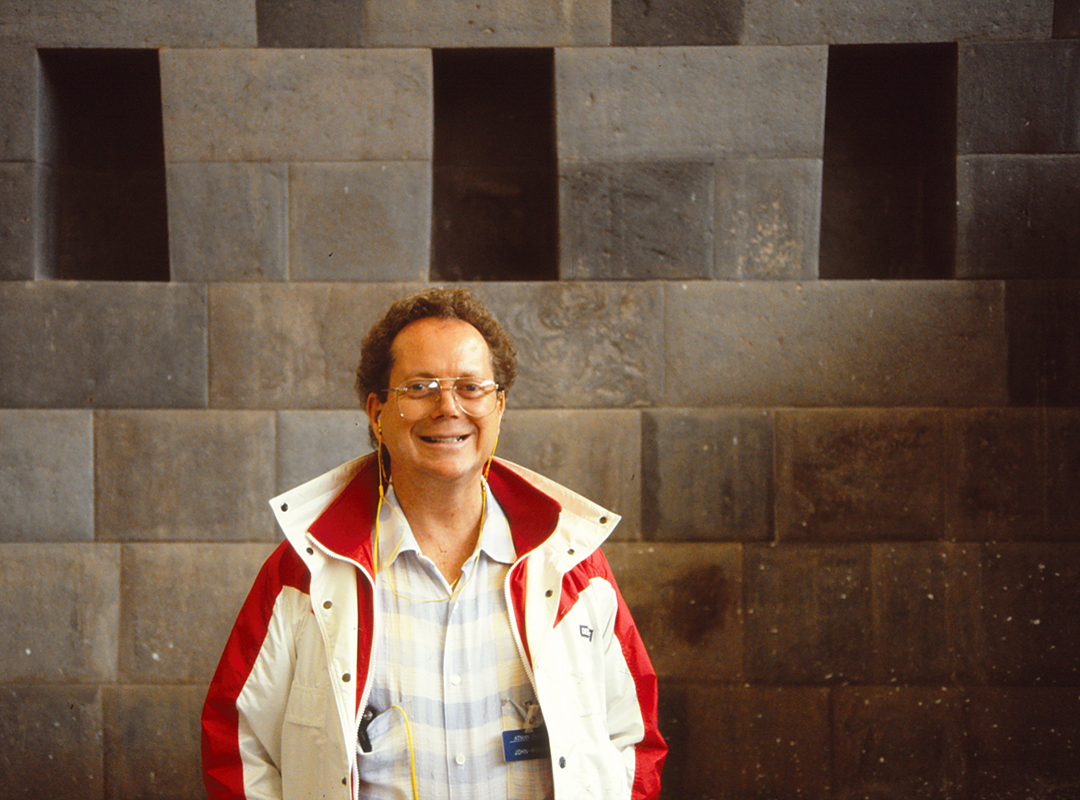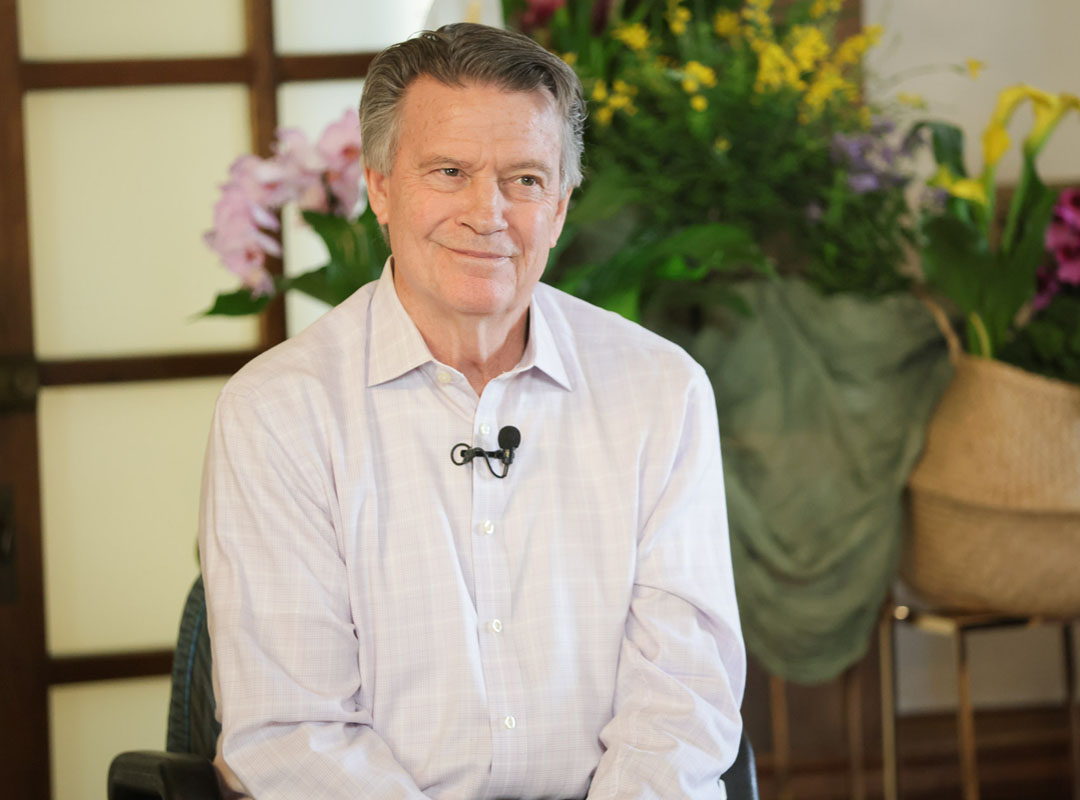



In the spring of 1980, John-Roger, Russell Bishop and Jack Canfield got together in Amherst, Massachusetts, to share their views of the educational process. In this first part of a two-part series, they discuss refreshing and exciting possibilities which involve tapping the inner wisdom as an added motivation for growth and learning. This was originally published in The Movement Newspaper in March, 1981.
RUSSELL BISHOP: I know both of you deal with education in some similar ways and in ways that are different. So perhaps a good place to start would be to just ask each of you how you view education.
JACK CANFIELD: The way I’ve been viewing and working with education over the past ten years is primarily viewing each person—child or adult—that I work with as a Soul which has a personality vehicle through which to function in this world. To me, the personality encompasses the mind, body, emotions, imagination, intuition and the ability to choose and to be aware through these functions.
I see the purpose of education being to provide and develop those vehicles so that the mind and the body is healthy and relaxed, the imagination works clearly, the emotions are able to be expressed when appropriate and controlled when not appropriate. Appropriateness might be determined, not socially, but in terms of Self or Soul expressing itself. So a lot of the work of education is developing those personality vehicles so they’re strong and in cooperation with each other, rather than in conflict with each other. Education is also bringing all aspects of the consciousness into alignment.
The root of the word “education” is either “educare” or “educere”, but both basically mean to “lead” or bring out that which is already within. So education is a way to bring out the wisdom that is present within the consciousness.
JOHN-ROGER: I’d have to be pretty much in agreement with that. My focus may be different in one sense of the word, in that I view a person as already knowing all things, and all they are doing is re-remembering or re-cognizing what is already present.
Education also provides a form into which those things that are remembered or recognized can be placed. That form is determined by what is workable according to the environment and according to individual talent and preference. I think the biggest lack in some of our traditional forms of education is that we haven’t taught people how to live in a social atmosphere in terms of success. Much of my work has been to show people that no one loses. You can’t lose, so there’s no need to settle for the false form of failure and lack. There’s no true failure. Failure can really only be defined as an error in approach.
So the educational process is one of staying with people until they come into their complete remembrance. At that point, you would hope that they have also learned the form and developed the talent to provide structure for the inner wisdom. And I think that fits pretty much with what Jack is talking about.
RB: J-R, it sounds like you’re talking about the educational process being that which brings out the true divine essence of each person and then provides some kind of context in which to express that on this planet.
J-R: I don’t think you can “bring out” anything that a person knows except their awareness of themselves as a divine being. To activate that awareness doesn’t require going anywhere; the person just comes into the present. It’s a re-cognizing process more than it is a memory process.
RB: Jack, it seems that you focus more toward an awareness of the practical day-to-day things. Are you saying that there’s a natural knower within people that knows how to read, write, do the math, whatever, and that education just develops that natural part?
JC: That’s part of the focus, but not the essence of it. For example, math is just a tool, and some kids may or may not need to know math in order to do what they’re here to do on this planet. For most of us math is a useful tool because it deals with things we need to know in our society.
But the focus of my work is more on how a student can envision those traditional tools or talents and use them to serve and enhance the expression of self, rather than as things that must be learned. That changes the motivation. It puts the motivation inside.
RB: You took an Insight Seminar in June of 1979. We talked a few months later, and you shared at that time some interest or excitement about Insight. What kind of interest did the training have on your view of education?
JC: The bottom line of the work I was doing before I took the training was teaching people to trust their own processes. I assisted teachers in learning how to do this and also in realizing that they could allow the children they were teaching to unfold in a natural and organic way. As a teacher, if you don’t trust your own process, you’re not likely to trust anyone else’s. Trust of another has to stem from trust of self.
I was doing a lot of work teaching students to love themselves, and I was beginning to work with larger numbers of people. I wanted to go in and change the whole context of schooling. I was honoring those visions and checking out a lot of the larger “growth trainings,” looking for a form that I could use to make my work even more effective.
Before I took Insight, I had taken a number of other trainings. At Insight, it was as if what I was moving towards was already being done—and with a loving quality and a spiritual dynamic that wasn’t present as fully in my own work and certainly wasn’t present in any of the other trainings I’d taken.
When I was pulled into Insight’s energy field, I wanted to become part of it. I didn’t see the point in trying to recreate it. There’s a support level in Insight—with the staff and the volunteers—that I haven’t seen equaled elsewhere. It works with an energy that just isn’t available anywhere else that I’m aware of. Plus I just love you Russ, and want to work with you, however that can be worked out. Are they going to print that?
RB: I think so. Insight as an organizational structure, is identified as Golden Age Education. We offer education for the golden age, or what some people call the new age.
JC: That’s what I want to do. I see “schooling” as a way to assist people in coming together and supporting each other in taking their own unique “next step” in their own progression, much as they do at Insight Seminars. That support would come from the knowledge and trust that people are moving toward what they need to be moving toward. Teachers would be involved in the process of learning, too; there would be a sense of growing, learning from their mistakes, not protecting their weaknesses or apparent failures. Everyone is looking for the inner knower through the experience of interaction with one another.
RB: The way you describe the dynamics of a school sounds to me like what we’ve been talking about as a People Center. Note: MSIA’s building fund is earmarked for the creation of a People Center.
J-R: He is describing some of the inner dynamics of the People Center. And it’s going to be much more than that, too. We might use the word “compound” in describing the center of a maelstrom where essential elements are contained until everything around it is in place, and then expansion occurs. In that sense, the People Center might be a compound. There might be many places like this. It may take time to include everyone in a process of golden age education. I don’t really get that at this time everyone on the planet is directed towards education.
RB: What do you mean by that
J-R: I don’t think a lot of people even know what education is. People don’t have any concept of it. I think there is going to be a bridging action with possible areas of turmoil between our present education and golden age education. I think a lot of us are sitting right in the middle of that.
You could say this new process of education is like a seed about to sprout into a beautiful flower or a caterpillar about to become a butterfly. We’re someplace in that process of becoming.
In any really dynamic change, there’s both a death and a birth that takes place. I think that when the change is made, those that are to be a part of new age education will be present and those who aren’t will be dead. It will be a self-selecting process. I think the planet is going to select those people who are going to be here.
After that change occurs. you may be dealing with 200 million people or a billion people, rather than the current four billion. In smaller numbers, golden age education can be facilitated, whereas if you tried to educate four billion people into a new method of education, you’d probably fail. Our present system would have to be revised so drastically that it would be blocked right away, by economics if nothing else. Just in terms of financial considerations, you can write off any major changes.
The only way it could happen is to reach people “across the board,” regardless of geographical boundaries, national destinies, political parties, etc. And that’s out unless you have a one-world government, which may or may not take place. If it does, you can almost bet it’ll be an anarchy so change would be controlled anyway. The only other way to effect new age education is to cut down on the number of people you have to educate.
That looks like a funny solution to the problem, except that it would be a natural selection. The changes will be sure, but they’ll be awfully subtle. As the Golden Age comes in there will be a time when you’ll have a half-breed. Even public education today is a half-breed. There are free schools, free universities, free colleges, free curriculums, etc.
JC: I see the new approach to education moving out in some kind of geometric progression. Three years ago, there were no Insight Training Seminars. Now there are about 5,000 graduates. Probably a year or two from now there will be 10,000 graduates. Each of those people turn around and share their new awarenesses with family and friends, so the concepts and the consciousness spreads out in a geometric pattern. I see the same thing in education. Right now it’s at the greenhouse stage or incubation period.
I think again of the birth of a butterfly. There is a metamorphosis that happens there and it happens slowly. There are, within the caterpillar, soft areas, and from these come little streams of cellular material that start connecting together and form the cocoon. Changes continue inside the cocoon and eventually the butterfly emerges.
J-R: There’s an interesting thing that takes place in the process through which a butterfly emerges. There is a level of consciousness that moves out, just prior to the physical movement, so that the physical projections know which way to go. If that were not so, the growth would just be random-without a pattern.
The consciousness moves out first and then the form follows the consciousness.
I think that’s probably the action with the spiritual form of Insight. The spiritual form moved out first, and now the physical form is flowing into the pattern created by Spirit. It can flow as rapidly as it wants to, but the physical form can’t emerge any faster than Spirit will move to set up the form.
When change begins, you let it happen and you cooperate with it to allow it to happen at a higher rate. If you don’t cooperate with change, it still happens, but at a lower rate. The masses on the planet that are just existing represent this lower rate.
If you don’t take initiative, change will only happen through turmoil. When the garbage gets high enough, everybody moves. The Indians used to create so much garbage that when there was too much, they moved to a new location. They moved because they were forced to instead of moving because they chose to. I look at education as moving on choices.
JC: For me, the question is, how do you evoke that choice?
J-R: That change may occur genetically.
J-R: It may be that the people who are going to effect the greatest changes aren’t on the planet yet. Perhaps when they are born, there will be some element that will be inbred genetically that will move them from that which is “dragging the anchor” to that which is “pulling up the anchor.” There is nothing quite so ridiculous as a ship trying to set sail for sea when it’s still attached to its moorings. Everybody keeps waving good-bye and there’s a whole lot of hullaballoo, but the ship isn’t going anywhere.
To me that’s where education has been. It might look like it’s doing something and it might act like it, and it sure might feel like it, but in my experience it isn’t doing anything. There hasn’t been a change. Only the word level has changed.
Garbage collectors have become sanitation engineers who have become ecological experts, but they are still collecting the garbage. The trucks are better, true, and more efficient. But the real questions behind garbage collection still are, “Why is there all that garbage? Why the waste? Why the inefficiency?” Making a significant, dynamic change in that would, to me, be an educational process.
The solution may be ecological. If you keep the area around you clean and I keep the area around me clean and everybody else keeps the areas around them clean, then everything will be clean. And participation happens to be a key to effecting these new patterns. In traditional educational approaches, far too often, people sit there and say to their teachers, “Give it to me.” And then they wonder why nothing happens. The new approach is to reach out and just get it. That way you have it whether or not the teacher is able to give it to you.
If we can get people to be self-motivating from a place of loving support and caring -and not from the point of view of: I’ll get mine before you can get yours—we’ll be halfway home. Motivation is so important.
People tend to build their energy motivation primarily from food. If we could just transcend that and pull Spirit in to be used as energy, then we’re dealing with a clean, refined and ecological energy source—which happens to be the only true energy source, anyway.
RB: Personal effectiveness training is really just an extension of what you’re talking about. The training offers people the chance to take a look at what they are creating around them and to learn how they can keep that in order. When you do that, you bring a sense of order to other people and you enhance your ability to be with them because you don’t have to relate to them through so much of your unfinished stuff.
J-R: I call it “spiritual ecology”. You not only clean up the obvious level, but you also clean up the more subtle levels at the same time. You might be able to do it from the bottom up, and you might be able to do it from the top down, and you can certainly do it if you move from both ends at the same time.
That’s a process of Insight Training Seminars and MSIA. People can get both of those ends moving.
I’ve seen people who are just in MSIA who will sit and do the spiritual “na-na-noo-noo” and not move in terms of life’s performance, although they may move in Spirit.
Then I see people take Insight Training Seminars who may not move any place in Spirit, and I notice that pretty soon they start dropping off in terms of moving in their own life also. The terms they use are: “I’m burned out. I’m ‘Insighted’ out. I’m workshopped out. I’m fed up.” All they are telling you is that they haven’t moved to the Spirit of what’s going on; they’re trying to run their information back on the same old procedures and it burns them out because they have to fight their new experience.
JC: A lot of that burn-out could be that they’re involved in something that’s intrinsically spiritual, but they’re trying to support it with personality-level energy…and it’s not enough. So they burn out. When they align with Spirit, then there is enough energy to support that level of being, in both the inner and outer expression.
RB: I’d sure like to find out how to integrate more of that spiritual energy into myself and have that energy more available to me.
J-R: It goes like this: You can’t put new wine in an old flask that’s full of old wine. You have to pour out the old wine before you can add the new. You have to disturb the old form and bring yourself up to the new form to accept Spirit. That’s just the way it goes. You can’t run your old behavior patterns against spiritual precepts. You have to destroy the old form; you have to give it up.
It works like this: People say, “I acknowledge that I spilled milk on the floor.” That’s one response. Then they may say, “I know I’m responsible for the milk on the floor.” That’s another response. Then they also may say, “I’m accountable for that spilled milk.”
That’s one of the newer forms of responses, which translates as: “Since I acknowledge that I’m responsible and accountable for it, I’ll do something about it in my own sweet time.”‘ And as soon as “my own sweet time” enters into it, you are trying to put the new form back into the old form; it won’t work.
The new form is to participate in your experience of accountability. So, you take a sponge and get down on the floor physically and activate your accountability. Put humbleness into action. Put the super-ego that says, “I should do,” together with the id that says, “I want to do,” together with the ego that says, “Here’s my action,” and actualize the awareness by cleaning up the milk. That way you don’t have to keep compartmentalizing. You can just flow with what is.
Far too often, I hear people do a word level game when they still haven’t cleaned up the milk. If you let it sit too long, you have to rip up the floor and put in brand new tiles. Or the whole rug has to be cleaned because you didn’t clear one area right away. That’s not being involved in the action of transformation. All you’re doing is acknowledging that potential transformation exists.
Or maybe you clean up the milk, but your child spills some more. You may say, “Well I cleaned it up once.” “Yes, but there’s more on the floor.” Cleaning it up once doesn’t necessarily mean that that’s going to do it. If you think so, you’re back to the old form or the word level of “could,” “should,” or “would,” without activating the potential transformation. You’re sitting on your aspirations, and that won’t do anything for you. Transformation takes perspiration.
RB: I think you just answered my question about how to make this learning process more available to people in terms of spiritual upliftment and the value of their involvement. What I’m hearing you say is that the more we can move into actualizing the teachings, the more we’re going to learn from the teachings of MSIA and insight. We’ll learn by practice, and then it won’t matter what it’s called.
J-R: I think, perhaps, that education has always been a process of practice, practice, practice.
JC: That’s true, whether it’s a spiritual practice, which is connection to the inner, or the practice of a talent, which is connection to the outer. It’s still the discipline of practice that does it.
J-R: And practice and discipline are the boundaries of freedom. Without those, people don’t have the freedom of progression.
JC: So the issue is: how do you evoke the will to be willing to practice and be involved with discipline?
J-R: You can’t evoke will.
JC: Could you say more about that, because I think the will has to somehow be called into play there. Why do you get motivated to be disciplined and practiced?
J-R: Spirituality—which is your motivation—has to be caught. It can’t be taught. So you can’t evoke anything except that the Spirit itself moves within you. That’s why you can’t evoke will. You can evoke “want-power,” but you can’t evoke willpower. Example: will yourself to fly across the room. You might want to do that, but you can’t. You can will yourself to do that all you want, but you can’t do it. Will yourself to stop listening to me, however, and see what happens. Everything inside of you will shut down.
JC: Okay, you could will yourself to walk across the room and do it…
J-R: That’s practical application, but not necessarily willpower. It’s physical movement.
JC: I know, but there has to be a reason to want to get up and move across the room.
J-R: I’m saying that you can’t take a person who’s a paraplegic in a wheelchair and say, “Will yourself to walk across the room.” They won’t be able to do it.
JC: Okay, but you can say “Will yourself to wheel across the room. ” If there’s some motion involved, there has to be some reason for that movement, whether the movement is flying, walking or crawling.
J-R: Desire.
JC: Okay, desire. So how do we fan the flames of desire without it being negative desire, desire that gets us in trouble? How do we direct a person to desire spiritual connection or better behavior, or whatever?
J-R: The spiritual tradition goes like this: When you get sick and tired of being sick and tired, you will move to a better space. Before you’re sick and tired, however, you may see the better space, know that it’s better, and still you may not walk across the desert if that’s what’s necessary to get to it.
There’s just really no such thing as willpower in terms of anything spiritual. There’s ego, stubbornness and determination, desire, and lust; there’s greed that seems to encompass a lot of other manifestations.
But there’s only one will and that is the will of the divine. That will is already present for us. The only issue is whether you can flow with it.
JC: Okay, but there’s still a will in choosing to flow with it or resist the flow.
J-R: No, that choice is not available to anybody. There is only one choice-whether the divine wills it or not. Once it does, you have no choice but to move with that choice. However, you may lead yourself to believe that you did choose it and play all sorts of rational semantic games that make you think it was a matter of choice. It wasn’t. Was there any other choice available to you? Based on results, no. Based upon fear and speculations, oh, yes, tons of choices.
Do I have any other choice but to be in this room, talking with you today? No, absolutely no other choice. Does that bother me? I’m delighted. Could it bother me? Sure. I could just start running negative “won’t” powers.
When a person starts running negativity, that always sets them aside. They have to justify that, and the only way separation can be justified is to hold back from that which is good.
If you take away that part of people’s uniqueness that causes separation and show them that other people also experience the commonality of what they are doing, you assist them in moving towards the greatest good. In Insight Seminars it’s called “sharing.” A person gets up and starts sharing what’s happening with them, and the facilitator says, “How many other people have experienced that?” and 100 hands go up. The person sees this and says, “Wow!” and transforms themselves, realizing they’re not “the Lone Ranger” anymore. That sometimes becomes a real catalyst for the group, especially if that person had fought for their uniqueness and separation or had tried to identify it as a quality of the savior, avatar, guru, or something similar.
When you take away those false identifications, people find love flowing underneath it all. And love is the bond that holds us all together. If you can sit with a person who’s expressing separation and outlast them in determination—not in stubbornness—they will not have enough “won’t” power to outlast you. They will have to force themselves to hold their separation while all you have to do is be determined to be present. Being present takes no force. You can be very relaxed.
If they are forcing themselves to maintain their separateness, pretty soon they’ll get a headache or neck-ache or backache; something will happen that will cause them to start giving up their space. The moment they start giving up space is the moment that healing starts.
And once they start the healing process, all you have to do is be present with them. They’ll turn to you automatically. And as soon as they do, the motivation is activated. It is the love, the oneness, the Spirit that is the motivation. When you bring that awareness to people’s experience, then you have instituted upliftment for them.
JC: The real key is to support that, goodness in people and to allow them to express themselves as they move towards discovering the underlying oneness. For that to happen in a classroom situation, the teacher has to believe that the students are intrinsically good. How do you change those basic attitudes and institute the new attitudes of goodness and wholeness and health?
J-R: In much of modern society, we deal with sickness about 90% of the time and with wellbeingness about 10% of the time. Because we condone and support the cause of sickness, we get hooked into this sympathetic process. In MSIA and Insight, we re-educate people so that they do not support sickness. We may recognize that a person may have, say, a headache, but we don’t let them run their sick headache on us and use it as a “reason” for separation.
If we need to talk to a person, and they say, “I can’t talk to you; I have a headache,” we may ask them, “What are you doing for it?” If they say, “Nothing,” then we may suggest that they do something to alleviate the headache, and in the meantime, relate to them as if they did not have the headache-as if they were well. We don’t let illness or depression or fatigue stop us. We don’t quit because of those things.
If people can get it through their heads that they can go on regardless of headaches, backaches, toothaches, etc., they’ll be so much further ahead. Those things do not have to stop us. A headache is going to hurt just as badly whether you’re sitting at home or sitting in a movie with your friends or in class or at work. You can have a headache and go on with your life, if your attitude allows for that possibility.
If a person says, “My headache gets worse when I walk,” I wouldn’t suggest that they walk. That would not be of service, nor would it be loving. I might suggest that we look together at what is going on with them. I would deal with the person, rather than with the headache. If you deal with the person, then the part of them that created the headache in the first place, will deal with the headache.
Traditional medicine deals with the headache. Some of the “new” healing ways (which are really the old healing ways) deal with the cause of the headache, which is how the consciousness is manifesting in the body.
In Insight, we deal with the consciousness, and in MSIA, we deal with the Spirit that activates the consciousness. In a sense, being in Spirit, we’re right at the apex-where everyone is headed and we can just sit and wait for people to come up to that.
Some people say, “I think the answer is over here in toe massage.” So change your shoes or go barefoot and see if that does it. Some people say, “It’s over here in drinking parsley juice.” Others say, “I know it’s over here in not eating anything but fruits.”
Those are all symptomatic processes, like treating the headache. Once you come to a place where it doesn’t matter what method you use, your body will activate all foods and purify them because they’re encountering the spiritual flow within you. That’s education, too.
When you relate to your students from Spirit, they are automatically what you could call, “psychically responsive.” They’re going to listen to you and pay attention to what you say, and then they will move on it and complete it.
A baby is made psychically responsive by having something dangled in front of him or her. The baby sees that and then reaches for it, and that first reaching out is motivation. So we teach them with glitter and glamour how to reach out. We sit and play with them. We laugh and we touch them on the side of the mouth to get them to smile. They become psychically responsive, and those responses are awfully hard to change later.
If we are going to be involved in education, we have to supply something that has more value than the ability to be psychically responsive. A zombie can be psychically responsive. A baby is sort of a young zombie that is going to keep growing, but it may still grow up as a zombie. The form may look like it’s growing dynamically, but when they get to be 35 years old, they may be as much of a zombie as they were at two months. There has been no more growth-they’ve reached the end of that.
We have to somehow put something else in there, and that something else is called an energy that moves inside. It’s the energy that people feel at Insight Training Seminars; it might be called living love energy. The opening of the heart transforms people in spite of their programmed, conditioned beingness. They do things they never thought they’d do. They say things they never thought they’d tell anyone. That’s motivation. That’s also getting free.
JC: When you said we motivate through glitter and glamour, I had two thoughts: one was the recognition of the guy who’s 40 years old and is still motivated by the glitter and glamour of the fancy car, the Hollywood scene, European vacations, etc. And the other thought was that so much of traditional education has evolved because of that original motivation. We need to motivate the child for the child’s sake, not for the sake of the parents or teachers, not to fulfill something in the adult.
J-R: The cloning of a child…
RB: What can be done to get people to activate the discipline that they need?
JC: What I’m sensing is that you don’t have to activate the will, the will is there, and the will has a quality of movement, too. What you need to do is not get in the way of it, and perhaps even cooperate with and support it.
Motivating a child seems to be a distortion; the actual motivation is for the parent or teacher. The father who says, “Smile for Daddy,” gets to think that he is a “good Daddy” if the child smiles. The motivation is for Daddy. The teacher gets to think he is an okay person if his students read at a higher grade level than those of other teachers. Thus the motivation is for the teacher.
Intrinsic validation comes from the recognition of the goodness, and the God, that is within. When there’s not that intrinsic validation of oneself in an action, then there has to be validation from some external source.
J-R: You’ve heard the old cliché, “Those who can’t do teach.”
JC: I just had an insight that people think teaching is an avoidance of doing, or a fear of doing. If I am teaching you to do whatever I think you ought to do, then I don’t have to be doing what I’m intrinsically inspired to do. I can be focusing on your process and therefore avoiding mine.
My basic vision for the educational process is that everyone on the planet—whether they are traditionally labeled as teacher, student, parent, or whatever—realizes that they are all part of that process. I know that there are many, many dimensions involved in bringing forth the fullest expression of wisdom and loving, and I see everyone as integral parts of the educational process.
J-R: When both teachers and students view themselves and one another as being together in one experience of education, we will have much more effective education.
When teachers and students view themselves as being on opposite sides, we have difficulty. If you go to school, and in the process of learning get rapped on the knuckles, that rap indicates that your behavior at that moment was not appropriate. It also definitely says that you’re bad. Therefore, you learn that, based upon your appropriate or inappropriate behavior, you are either a good or a bad person.
Then you move from the classroom out into the world, you may meet your teacher outside of the classroom. Perhaps the teacher goes to the same church as you do, or shops in the same store or attends the same movie. And since that teacher has let you know that you are a bad person, there is nothing you can do in the teacher’s eyes that will make you worth anything. So you slash the tires on the teacher’s car to prove he is right. Or you try to embarrass him or make him look bad, because that’s the way it is.
A good teacher will let you know that even though you can’t read, it doesn’t make you a bad person. He will let you know that you are okay just the way you are, and that you have this difficulty with reading that gets in your way and prevents you from expressing the fullness of your being. So the teacher deals with reading, instead of with the ruler that raps you on the knuckles.
Teachers who deal with children in terms of who they are, teachers who touch their students and care for them and let them know that they are involved together in the experience of learning, are having tremendous success. And that’s just the beginning. There’s more to come.
To be continued…..