

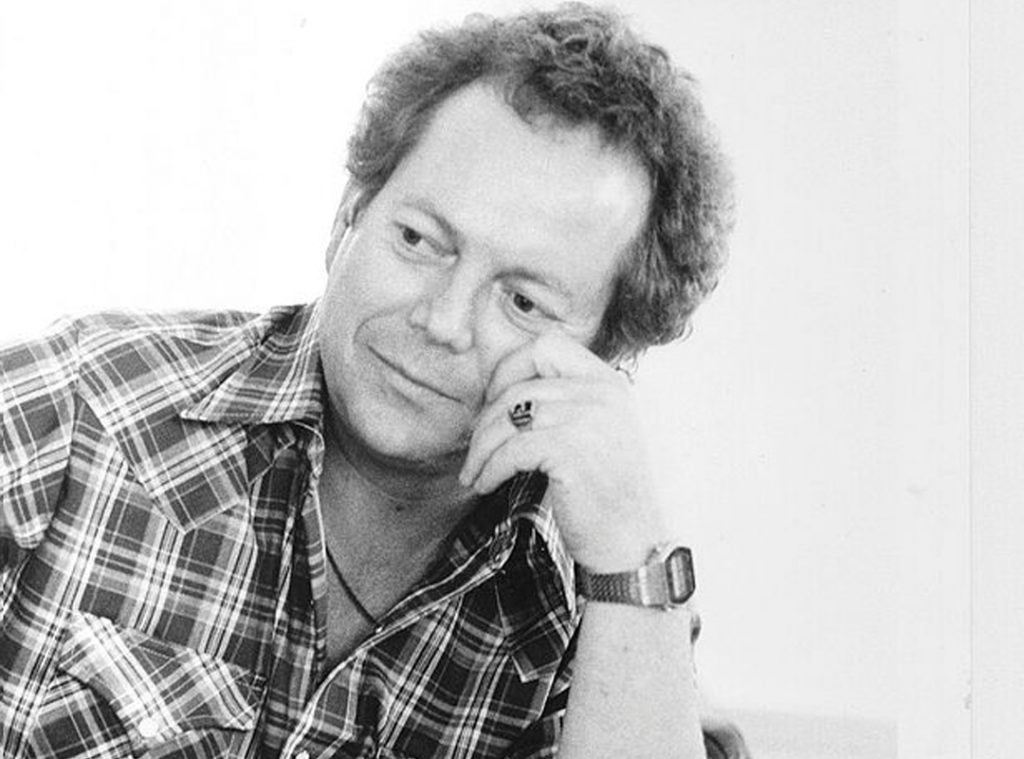
This interview, conducted by Rick Edelstein on behalf of The Movement Newspaper, was first published in August 1980, Movement Newspaper Volume V Issue 8.
MOVEMENT NEWSPAPER: Is there a spiritual hierarchy running this planet?
JOHN-ROGER: Yes.
MN: I’ve heard that, at different times, you’ve gone to Hawaii, possibly to Peru also, to meet with members of the spiritual hierarchy. Is that true?
J-R: Yes.
MN: Did you meet with them physically?
J-R: No; because all of them are in spiritual bodies.
MN: If they’re in spiritual bodies, why do you have to go to a physical place?
J-R: Because they’re anchored above that level as a type of overseer.
MN: I’m trying to understand what appears to be a contradiction in that.
J-R: If you’re directing a movie for Warner Brothers, why don’t you go to 20th Century Fox to do that?
MN: I understand it on that level, but when I think in terms of a spiritual force, I assume, and it may be an incorrect assumption, that there’s a macro-cosmic view that covers the entire planet.
J-R: Well, it’s not necessarily either macrocosmic or microcosmic. Let me explain it another way: The reason we went to Fiji to meet with the spiritual hierarchy is because some of the forces that were involved are part of the ancient god form of the continent of Lemuria or Mu. A lot of these old gods that were prayed to then are still valuable as part of that creation — and they are present there now. That doesn’t mean that these forms are really “high,” but that they are present as a force in that area. These god-forms are invisible forces that in the past had interplay with the physical earth so that people could pray to them and certain things would manifest physically as a result of those prayers. There was some form of empirical evidence of this.
MN: Do these spiritual forces split territory like salesmen?
J-R: No, it’s not necessarily done that way. It’s done more in terms of time epics. The gods of ancient Atlantis influenced, somewhat, Egypt, but they had hardly any influence on Palestine. They had some influence, actually, in Jerusalem until the awareness of Jehovah came about, and then that influence waned. The Jewish people put a lot of direct power into the goddess of fertility, who was called Astari. That’s mainly prior to their awareness of Jehovah.
These ancient gods of Atlantis, because of the power that the people gave to them, became part of the consciousness of the people. So when Atlantis went down, the goddess Astari, and others, were part of the people, not part of the geographical land mass. So the survivors and their descendants prayed to her from wherever they were, and the influence became prevalent throughout the area. Now, in some areas, when the lands went down, the whole civilization and all of the people there went down with the land. It all disappeared. And the god that was present for the people is now tied into the etheric imagery, to the prayers and to everything that went on there, and is still held accountable for that action.
These god-forms were not what we would call “God”. They were not the “One-God”. So, the question comes up-I thought there was only one God? There is only one God, and that God has a lot of manifestations. When you pray to the “One God”, is that what is really taking place or are you praying to Astari or Jehovah or who? it depends on your focus and your intention. There are spiritual forms who create a certain focus of completion in particular areas, and if your prayers are part of their focus, then they will “hear” your prayers. If your prayers extend beyond any single focus and reach into higher awareness, then you may, indeed, be praying to the “One-God.”
MN: When you met with the spiritual hierarchy in Fiji and in Peru, was it in terms of determining what would be for the highest good of the planet?
J-R: It had to do with the area of Lemuria. It didn’t have to do with a whole planetary thing at all. It was just for the one area.
MN: Where is that area?
J-R: The South Pacific-Hawaii, Fiji, that whole area in the Pacific.
MN: Are there plans for that to rise again, for that consciousness to return?
J-R: Yes.
MN: Which leads me to what is called the “new age”. Is there really such a thing as the “new age” upon us?
J-R: Yes, but it isn’t here as a mass consciousness or as a group expression at this point. It will become more prevalent after the year 2000. Right now, it’s the signs of the new age that are important to observe.
MN: I see it in the children.
J-R: Sure, but there is even more of a collective form that we can observe. A lot of people who are 50, 60, 70 years old may enter into the new age tomorrow.
MN: I hope so!
J-R: The Piscean Age, which is ending, dealt with a vain, egoistic energy that can be translated as, “Get it while the getting’s good and get out quick,” or, “When do I get mine?” or, “How about me?” The new age is symbolic of a more group-consciousness, where you say, “I’m not going to take mine right now because there are too many of us who need to participate. And if I take mine, there won’t be very much for everyone else and I don’t need all of that anyway. So, I’m going to leave mine in with the group and let everybody partake of it and I’ll still get what’s necessary for me.” It becomes “need” rather than “greed”, and that’s one definite theme for the new age. You get what you need, according to what you need; and there is no excess or waste. That would cut down on fat people, for one thing, and it would cut down on a lot of illnesses that are due to overeating and eating the wrong type of foods. It will mean better health all the way around. Now, there are people now who are living in a new age consciousness. There have always been people, since before Jesus and during Jesus’ time, who where part of the new age or the golden age. It’s not that unusual … and it’s not that prevalent either.
MN: In that consciousness, there will be pooling, ecologically, and on all levels.
J-R: There will be a spiritual ecology that will be present.
MN: In the 50 years that I’ve been on this planet this time, I’ve seen the consciousness come from a very competitive “you or me”, which I grew up with, to the “me” generation in the ’60s, to a “you and me” or “we” thing, which you are referring to. And I see it manifested in many different groups around the planet. Yet, I don’t see a cooperation among the groups, even the spiritual groups. Will that cooperation and oneness happen?
J-R: Probably. If the groups are really spiritual, sure, because Jesus said that when two or more were gathered in his name, he would also be there. So, in groups that are of the Spirit, there will be oneness and cooperation because there can be no conflict. There is no conflict. Now some groups are not groups, they’re just crowds, and I don’t know that there will be cooperation among crowds.
The spiritual groups, and that’s not just those who say that they are spiritual, but those that are manifesting and demonstrating aspects of the Spirit, are all teaching what I call “self-ing”. “Self-ing” is the maintenance of self at no one else’s expense — it is the maintenance of self within the new age, within the group. You still get to be you. Selfish was when you got to be you, but at someone else’s expense. “Self-ing” is where you get to be you, but there’s no expense to anyone else, because you can just move around, over, or under the other person, without taking their space or getting in their way. And at the same time, you get to maintain your individuality and your own individual and unique space. It’s a high state of cooperation among everyone. The keynote in the new age will be cooperation.
MN: That’s paradise.
J-R: I think that the overlying process of this unity in the golden age is what I might call a “hope umbrella”. We’re all saying, “This is what I’m shooting for. I may not be there yet, but I’m going for it.”
MN: I appreciate the name, the Movement of Spiritual Inner Awareness, because I don’t feel there is an answer, but there is movement; there is a process.
J-R: Yes. It has to be a process, a movement, a direction. People ask me often if I follow the Christ. And my response is that, yes, I follow the Christ energy. I don’t follow the energy of Paul, as many people who call themselves Christians do. Many follow the teachings of Jesus Christ according to Paul, and the way I look at it, they are not truly Christian. They are Paulists. If you read Paul’s works, you can understand the origin of some “Christian” thought that is against everything that is of the world. They say that if you don’t worship “our” God, then you worship the devil, and you are evil. Prior to that point of view, Jesus said that we are all gods.
MN: One thing I’d like to talk about a little subjectively is the concept and specificity of Jesus. My background has been Jewish, and I’ve seen myself and all my Jewish brethren and sisters grow up with a negative reaction to the name “Jesus”. I’ve also gone through a process of believing myself an atheist, where the concept of Jesus became an invention, a fiction. And then I came into the Movement of Spiritual inner Awareness, and whenever you mentioned Jesus, I always thought of Jesus as a process of loving, because I haven’t been able to relate to Jesus on the cross.
J-R: Well, who wants to? I don’t relate to him on the cross. That would be foolish. That’s like relating to your life 20 years ago, when you are no longer doing what you did then. To me, people who hang Jesus on the cross and worship him in that form don’t know what’s going on, because he got off the cross, resurrected and walked among his people. So that has to be your process. And I don’t think you even need a cross to remind you of what happened. You don’t have to hold yourself in the past in that way. You can let it go and move to what is present now, which is that the Christ is present, living in your heart and in your consciousness.
Worshipping Jesus on the cross is a backward process. It would be like giving your wife some money, and she spends some of it and keeps the change. So, for the next 20 years, you say, “You didn’t give me back the money; you kept it.” You keep beating her in the head with that one thing until she finally says, “Give me a break. Can’t you just forget that? Sure, I kept a dime that day. But why are you making such a big thing out of it?” When you can say, “Yeah, and who cares?”, then you can get on with your life in the present moment. And then it is a process not only of not holding it against her verbally, but letting it go in your mind also, and in your emotions, and letting something else be in that space.
MN: Isn’t it important to let go of all things that are past, the positive as well as the negative?
J-R: Well, you can’t live any of those, once they are past.
MN: I know that many of us have had certain very uplifting, extraordinary experiences that are very fulfilling spiritually. When I have had those types of experiences, I have wanted to keep them alive within me, and I’ve kept stoking the furnace until I’ve realized that that is an emotional desire.
J-R: If it was a past action, then there has to be an emotional energy. If you have a spiritual experience and you want to keep having spiritual experiences, then you must turn from that which you just completed and go on to the next thing. It doesn’t matter how wonderful or uplifting your experience was; you turn from that and go on to the next thing. To do less is to deny your own growth and awareness. And as soon as you “measure” your present experience with a past experience, you have judged it and your judgments will be upon you — and judgments are almost never happy, and therefore, you have propelled yourself out of Spirit. To get yourself back into Spirit, you move into the present moment and love whatever it is that is happening.
The neat thing about the Bible is that it gives a really good blueprint to live by. If Christ is the action we are shooting for, then Jesus can be our pattern. Can you find anything better as a pattern? Maybe, but I haven’t found it yet. I’m always looking, and I don’t look in terms of doubt towards Jesus, but I look as a process of looking and checking things out and being aware of my world and my environment.
MN: You mentioned judgment. There’s a tricky line between judging right and wrong, shoulds and shouldn’ts, and being neutral in our observations and making correct evaluations. Aren’t we here on this planet because we made “wrong” choices before, because we goofed some time previously?
J-R: We’re here because of disobedience.
MN: Then the tricky thing is to be aware of what we do that is destructive to ourselves, to others, or to our own spiritual advancement, without judging. To take the responsibility without the blame is a difficult line.
J-R: It takes skill.
MN: To say, okay, I really messed this up and I won’t feel guilty about it.
J-R: If you won’t feel guilty, then you don’t think about it.
MN: What I’m asking is, how do you get to that point?
J-R: There are probably a lot of ways, and there’s one way that’s called the “reason way” — you reason. If you judge something, the reason you are judging it is because you think it’s wrong and it should be changed; it should be different. So, you place judgment and if that judgment comes from a true place inside, then the thing is immediately changed to match what you think is right, or there is punishment that takes place to correct the wrong.
Now if you place judgment and nothing changes and no punishment follows, you have a pretty good indication that your judgment isn’t working. What if I take this ring and say, “I’m going to make this ring go away right now. It’s going to go, NOW.” And it doesn’t go. So, I’m aware that it didn’t go and I say, “This is a terrible ring.” That’s a judgment. And I say again, “This ring is going to go away, right NOW.” And nothing happens. So, I judge the ring again. But my judgments don’t make it go away, nor is there any punishment that I can bring to the ring. So, I just declare that it isn’t working to approach it that way and stop judging it. I realize that the ring is going to do what the ring is going to do, which is to stay present, and there’s nothing that my judgment can change.
MN: But is there anything wrong with judging something and acting upon it and changing it if you can? I can see that if you can’t change something, it’s not productive to judge it, but if there is something that can be changed, and you can take action on it…
J-R: There is a process inside of us that’s something like the “right-wrong game”: This is right; this is wrong; I’m right; you’re wrong. There is judgment of content and intent, and there is an emotional quality with all that that’s not very productive. But if you say, “I’m right for myself on this issue,” then you have not made the other person wrong. You have declared your position and your direction and your intent, without involving the other person. If they ask if they are wrong, you tell them that they have to make those decisions for themselves. You decide only for yourself.
MN: On a more epic level, what about the Viet Nam war, for instance? So many of us judged that as incorrect and participated in demonstrations saying that our country’s actions were incorrect. What about that type of thing?
J-R: If the Viet Nam war was really incorrect and you know that, then can you also tell me if it’s all right for your neighbor two blocks down the street to be dating the girl he’s dating? It’s not quite as epic, but if you can know what’s right for all the Vietnamese people, surely you can tell me what’s right for your neighbor two blocks away. And if you say, “I don’t know that. I can’t tell”, then how can you tell about Viet Nam? You might say, “Well, my view was based upon reasoning and emotion and that killing is wrong and all that.” But you have only judged that on a period of 10 or 20 or 30 years.
Let’s look at the Vietnamese people for the last 3,000 periods of their existence. As a collective group, they may have gotten exactly what they created for themselves, and they may have balanced all of their karma. Now, is it bad for them to be karmically free of all that? Is that wrong? Perhaps that particular freedom didn’t come about in a really popular way, in terms of what we all might have wanted it to be, but it came about in a way that was entirely perfect. There was no overkill; there was no underkill. The Americans that went over there and were caught up in it were part of that Vietnamese process thousands of years ago, and even though they were born in America this life, they were pulled back there to complete their karma, also. And those who went through the war unharmed were not part of the process and came home safely. So how can that action be judged as “wrong”?
Now you can say, “Based on what I’m seeing right now, I don’t like it that they’re fighting and killing each other, and I can’t do much about it from my room here, and being righteously indignant won’t help, so I think I’ll just go within to that peaceful place and stay centered. Then, when everyone else is running around in chaos — emotionally and physically — I’ll be able to assist them because I’ll be calm.” In the midst of confusion and chaos, it is always helpful to have people who are centered and calm. It’s nice to be able to suspend judgment to say, “I don’t know what’s going on and I’m not going to decide what is right and what is wrong, but when it’s all over, I’ll do what I can to assist those people who have become involved in the turmoil.” It’s nice to just assist, not to punish or attempt to make anyone see any particular point of view. It helps to just lift people and give them the vision of unity and brotherhood and oneness. Can you read the future?
MN: No.
J-R: Right, and it hasn’t stopped one thing that’s going to happen for you in the future.
MN: But since we are mortals and don’t have the overview that you, as the Traveler, have, when we see from our point of view and our limited frame of inequity that people are oppressed and not getting paid a living wage, isn’t it part of our responsibility as aware people to initiate social action that will contribute to betterment?
J-R: That’s the golden age you’re talking about. A lot of times, you offer social betterment to people who move in to partake of the social betterment in terms of welfare or food stamps — and they’re Piscean people who are getting theirs while the getting’s good. So, they rob the “betterment”. Allowing them to participate in that is condoning the karma that they are setting up for themselves. So, if you move in to stop that action, not as animosity against anyone, but as positive action…
MN: I’m more interested in creating a condition where people can live more positively.
J-R: If that’s possible. What’s the best thing to do to assist people in living more positively around you?
MN: Anything that will contribute to their heart opening.
J-R: Doesn’t that mean for you to be positive?
MN: Right.
J-R: So, if you’re assisting someone to be positive, and in the meantime you’re sitting there with your righteous indignation against some social condition out there, guess what you are doing?
MN: Creating more negativity.
J-R: Right, and then that person picks up your negativity and walks out with it and walks your stuff down the street, and others are influenced. These things get real tricky. That’s why I say that the earth and its inhabitants aren’t as advanced as we’d like to think — and it’s not as bad off as we’d sometimes like to think, either.
MN: You don’t see it as being in its death throes, with the doom and gloom and hate that people are talking about every day?
J-R: Of course it’s in its death throes for someone every day. But is the planet in its death throes as far as the geographical mass floating through space? No. Is it in its death throes the way we know it? Yes. Is it going to have earthquakes and great land shifts and things like that? Yes. We had many earthquakes in California today. They were all earth changes. Are they going to be earth changes that will affect us? Well, a 4.5 earthquake may affect one person, and it may take a 6.8 to affect another. And it depends on how close you are to the center of the quake, and on the property you have. Some people just think about earthquakes and are affected. So, they stay out of California and other areas that have a lot of quakes. Earthquakes are part of the evolution of consciousness. When an earthquake hits, you are totally helpless to do anything. At that moment, there is not a thing you can do except just what you are doing and it’s not even a process of trying. You just do what you do in that moment. It’s a byproduct of what is happening under your feet. It’s an absolutely here and now process.
MN: Sometimes in situations like that — physical earthquakes or “earthquakes” in our own consciousness due to illness or emotional pain or whatever — our spiritual priorities get much clearer. They may get enormously clear in those moments.
J-R: Right, and that can make those things that seem “terrible” from one point of view a very great blessing. And sometimes the value can only be gained in that way. We all get things the way that we get them. And if it’s through joy and upliftment, then it’s that way. If it’s through some pain and confusion and turmoil, then it’s that way. It is the value received that is the important thing.
MN: Is it standard operating procedure for human beings to need pain or disaster for us to break through spiritually?
J-R: It’s not necessarily standard operating procedure. One of the planet’s standard operating procedures is that man is to have joy and to have it more abundantly. And a lot of people who have that don’t do anything with it except try to stay in that, which means that they don’t go anywhere with it, and then it becomes not abundant and it becomes painful. So, the pain has to go and with that goes what appears to be the abundance. And then they feel a lot better, because a “burden” has been lifted and they find a new level of abundance and prosperity underneath what they had previously identified as being their abundance.
Sometimes, in the evolution of consciousness it becomes time to move from one level of abundance to a higher level of abundance, and so the old has to make way for the new. Human beings, being what they are, have a difficult time letting go of the old when they can’t see what’s coming in for them. One of the ways that Spirit has of opening the mind and expanding the consciousness is hope. It will give you a vision of what might be, and that vision might be at “20”, and it seems completely out of reach.
But once the vision is present, you move and “1” is all that you know to do. So ,you do “1” and it doesn’t work. Then you see “2” and try that; it doesn’t work. But by then you see “3” and maybe even “4”, so you do those real quick, and then go on to “5”. Now it’s really opening up and you’re moving ahead and you’re excited about the progress. You try “6” and “7” and they don’t work, and now comes the big test. You say, “I’ve been so open and I’ve tried everything and nothing works. Nothing’s going to happen. I’ll never reach my vision.” And if you stop, what have you got? Nothing. Some people do stop and they end up living the rest of their lives in compromise, which is misery and pain.
And other people will just keep going, even when it’s difficult to hold the vision anymore. And eventually, if they keep going, they get to “20” and the vision is realized. And when they see that and experience that, they think, “Why didn’t I just do that first?” Sometimes they realize that in the original vision they even saw “20” but didn’t do it. They had to do “1” through “19” — one at a time. Sometimes Spirit is using that process as a way of bringing you into greater spiritual awareness. And Spirit may put many, many lessons and realizations into the process, so that it becomes more than the process or more than the result. And sometimes you can sit at “1” and see “20” and know you’ll end up there eventually anyway and you’ll just make that jump and be at “20” instantly. That can happen, too. If you know you’re going to be there eventually, you might as well be there right now.
MN: The joy that I’ve come into contact with in MSIA is very experiential, very specific and very practical. It just startles me sometimes to see how available it is. What is it that will block people from choosing back and experiencing this joy and love that everyone wants?
J-R: You did one primary thing that some other people won’t do — you didn’t let the authority of the Traveler stand in your way. The Soul does not want any authority above it because it’s made in God’s image. That is a primary factor, and when that gets down to the physical level and gets mixed in with the ego, people may say, “You can’t tell me what to do”, and they will not accept any type of authority. They say, “I’m going to do it my way.” And everyone is welcome to do it their way, but what if their way produces misery? And if they want to go for joy, then they must give up those things that make them miserable and move into new ways that will produce joy. And some people would rather do it their way, even if it does not produce joy, than give in to another way, even if that does produce joy. Sometimes people are just like that.
Some people say, “I’m afraid that if I do give this up and go to another way, it won’t work, and then there will be nothing for me to hope for, nothing to look forward to.” That could be the good news, because then they would stop kidding themselves and start dealing with the misery as misery, instead of dealing with the false hope that somehow their misery will produce joy.
MN: In the first few years that I was in MSIA, the primary expression seemed to focus around doing spiritual exercises and being of service. Those processes have brought me enormous joy. Then a couple of years ago, you introduced something called Insight Training Seminars and a great deal of the focus and energy of many of us in MSIA is now also involved in Insight. Why the introduction of Insight when spiritual exercises and service were doing such a terrific job on certain levels?
J-R: A few years ago, maybe three, at a PRANA house meeting, people there were complaining because their spiritual exercises and their service were not giving them the skills or the intellectual ability to deal with this world. I had, at that time, retreated more and more back into Spirit, so that my students would reach out further and further into Spirit to get to me. I knew that if they would reach high enough into Spirit, they would see how to deal with the world and have the clear vision of what to do.
But I looked around and realized that people were lazy and that they weren’t going to do it unless there was a method, a methodology through which they could enter into a process that would show them the value of getting into Spirit and how they could dissolve their “problems” through the process of Spirit. So, I said to these people, “I’ve withdrawn from you a lot and stayed back, but now I am going to come down to do battle for you and show you how to do battle in this world. I’m going to demonstrate this for you.” Various people wrote me and asked if I had more information.
Insight Training Seminars came about as a direct result of that statement. Insight teaches how to get into this world and make it work. It is a process through which you can find out how this level works, have the experience of working it, and reach a joyful emotional expression, mental clarity and the ability to continue working it. It is based upon the golden age consciousness of being of service to all and of service to yourself — of self-ing — of getting yourself within the context of the group, without hurting or harming anyone. So that was how Insight came about. I had been working in Spirit with 30 or 40 different people who I felt could bring forward a process to accomplish what Insight is accomplishing, a format that would move us past kindergarten and grade school and move us right into high school, or college. It came about the way it came about because of the person who said, “I can do that” and chose himself to do it. He said that he could, and I said, “Fine we’ll see if
it works.” And every day, we see if it works. Now, if Insight Training Seminars stopped right now, I couldn’t lose any sleep because it has accomplished exactly what I told people that I was going accomplish. I didn’t say I’d stay down here with them and fight for them forever. I said that I could come down and show them how and set up a method for them. Insight is teaching people how to live more joyfully here on this planet and how to make this level work for you.
MN: I’ve taken Insight I, II, III and the Service Training, which was one of the most blessed experiences of my life. I’ve found the process of Insight very similar to the process of working with the Traveler, in that it assists me in shedding garbage, shedding garbage, shedding garbage, and the more garbage I shed, the closer I get to the blessings that already are. Insight doesn’t give me any answers, nor has it made me happy or successful. It is, if I continue on with it, a process through which I can continue shedding garbage. If I stop it, it is of no value.
J-R: Yes … garbage accumulates here.
MN: So, it’s not an answer; it’s a process. J-R: It’s a process. Far too often people think in terms of “answers” rather than the process. They think of getting their degree in school, not in “degreeing”. They think of getting married, rather than “marriage-ing”. They think of getting a job, rather than of “job-ing”.
MN: “Marriage-ing”…In one of your seminars, you mentioned that if we’re really full and at one with Spirit, there’s no reason to marry. I’d like to discuss what some of the basic self contradictions might be on things like sex, lust, love, marriage and children. I’m not even sure that the contradictions are meant to be resolved.
J-R: I don’t get that there are any contradictions.
MN: Well, males and females, in this so-called age of freedom — and I’m not sure how free it is — can have sexual expressions without society castigating us. And yet, with all this so-called freedom, there is still the feeling that if we make love to someone that we don’t love, there is no fulfillment. Balance that with the lust factor that exists in a human being, and it appears that, to fulfill the lust, we must find one person that we love and marry.
J-R: Are you asking if you have to get married to fulfill your lust?
MN: Get married or have a committed relationship with one person.
J-R: Well, those aren’t contradictions. They’re not even close to being the same thing. Lust can be many things — you can lust after a house, a car, food, money…
MN: I’m talking about sexual lust.
J-R: Sexual lust can be satisfied a lot of ways. If it’s just lust, it can be handled just as lust, and it can be handled in or out of a marriage or committed relationship to one partner. If it’s just lust you’re talking about, it can be temporarily satisfied in a lot of ways.
MN: I’m aware that expressing myself in sexual lust doesn’t satisfy me. It doesn’t work for me. It’s not fulfilling.
J-R: Lust never is fulfilling. It’s a primary distraction from the Spirit that you are. In the Spirit that you are, you fulfill yourself. In lust you go to somebody else or something else to attempt to fulfill yourself through them.
MN: Or through an orgasm.
J-R: Well, an orgasm is finished in the “moment” it occurs. Often when you are through with sexual intercourse, there is an uncomfortableness that appears right away, which tells you that the “urge” you felt was not for sex, but was for the fulfillment of your Self. And when the urge is for fulfillment of Self, sex will not satisfy that.
If, when you have had sex with your partner, there is a complete loving and a longing to be closer and to hold them, be with them, lay down your life for them, then you know that is love. And in that loving oneness, you can enter the kingdom of heaven. Can sex be used to do that? Yes. It can be. And it’s not the best approach and far too many people aren’t sharp enough to discern the difference. In lust there is always incompleteness. And if it’s Spirit that had sex through you, then what you did was enter into intimacy with your partner. You bypassed the attention, acceptance, approval, affection, and the orgasm — and you entered into intimacy. And that intimacy becomes a spiritual thing where the two of you were One in your union
MN: The other day on television I saw an interview of a paraplegic who was asked how he handled his sexual expression since he had become a paraplegic. He said, “Sexuality doesn’t have anything to do with being paraplegic.” He said that he could have more sexual intimacy now than he could before his accident.
J-R: To me, intimacy translates this way: You and I are having an experience of intimacy here because we are sharing our feelings and the content of those feelings with each other without editing what we are sharing. We’re not concerned that the other person is going to judge or condemn, so there is a free flow of energy, and as that gets freer and freer, Spirit steps in and activates itself through us. And at that point, it becomes self-fulfilling, not as a contact high, but as a spiritual high. We get a contact high from watching a performer sing or dance or from watching a movie — that is a form of intimacy, but that is only one way. The performer gets to share with you, as an audience, but you do not get to share back with the performer. You do not get to complete the action of sharing. In service, you complete the sharing. Two people share with one another. Each serves the other by listening and relating, without editing or controlling the format.
In this interview we’ve talked about a lot of things, and we’ve jumped from one subject to another and it’s all been very fine because we’re in a state of intimacy here, of just giving and receiving and sharing. Does intimacy mean it has to go into hugging and kissing or a sexual expression? No, absolutely not. That becomes a process of sexuality. Hugging and kissing are forms of sexuality. Flirting is a form of sexuality. Sex itself is a form of sexuality, but even more it’s just the mechanics of the sex act, penetration, reception.
There may be sexuality within the process if you communicate with your partner — if you ask how it is for them, if it’s okay, if they’re happy, satisfied, if there is something you could do to make it better for them. The communication is important, soliciting from them their inner feelings during sex, letting them know that you are not using them as a sexual drop but that you care about them and how they are with the sexual expression.
When you are doing that, there’s nothing you do wrong with that person and you wouldn’t do anything wrong, because you’re caring enough to please them. And within that, you let them be responsible for their own orgasm and you are responsible for yours, and all you are doing is working to bring those things into a oneness of completion at the same time. That’s called loving communication. That’s a spiritual flow.
At those moments, you probably stop thinking as the spiritual energy of orgasm moves through you. If it’s been complete to that point and you back off from penetration, you still want them close. You still want to hold them, maybe touch their feet, wrap your foot around their ankle, touch their hand or head, or you may just want to lay close to them and smell who they are at that moment. You may both just drop off into a real deep sleep where there is no dreaming. It’s like you’re “dead”, gone from the body. You’re out of the body and in the presence of the Lord.
Look for Part Three of the Interview in an upcoming NDH.